Closed today
Ahn Jung-geunNational Palace Museum of Korea
Dokdae: The Eight Characters Left by Ahn Jung-geun
독대 獨對: 안중근이 남긴 여덟 글자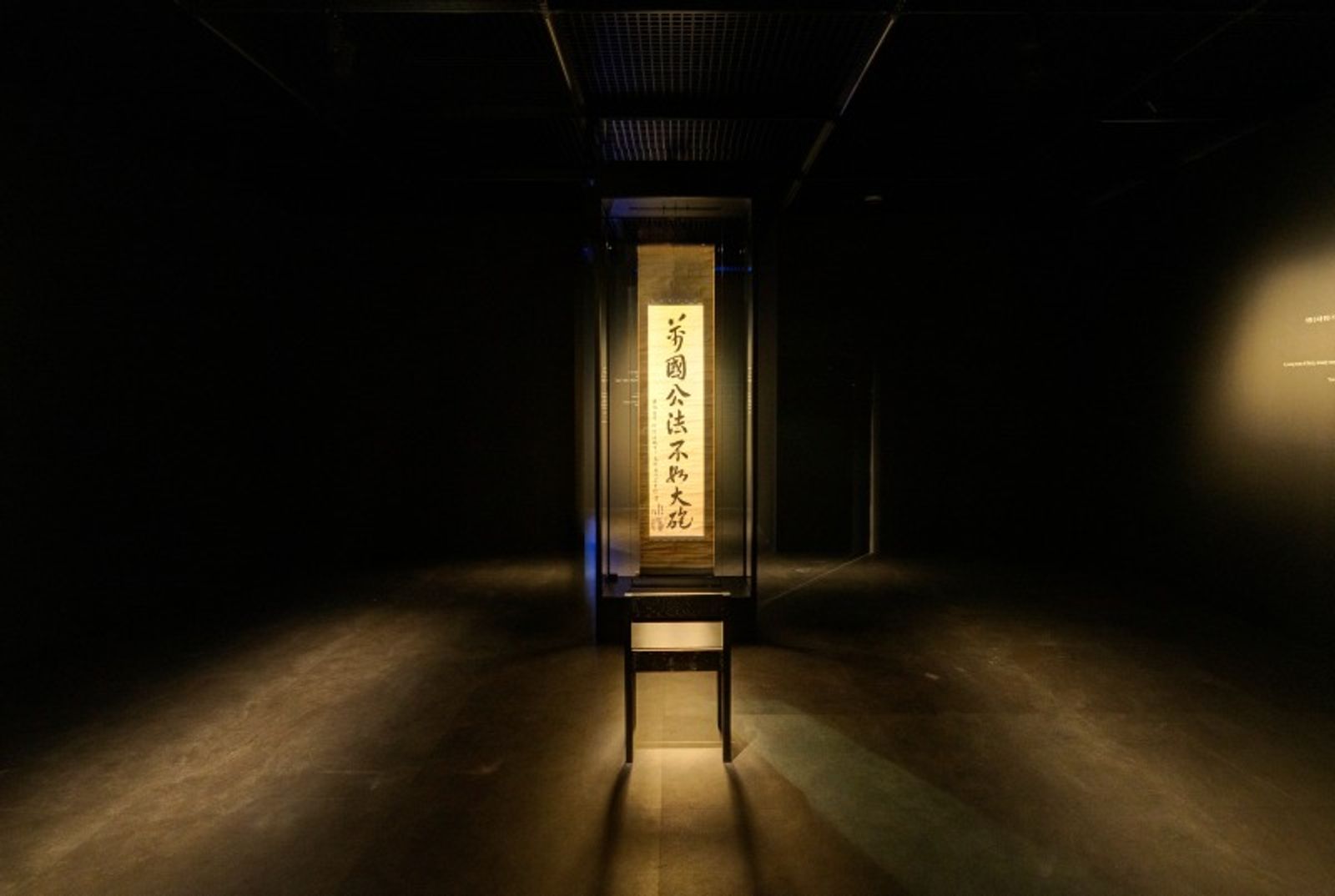
About the exhibition
You will see one calligraphy work, 萬國公法不如大砲, whose eight characters say that international law is no match for cannon. Ahn Jung-geun wrote it in Lüshun Prison in March 1910, shortly before being executed. The museum has shaped the room to feel like meeting Ahn alone in the prison. Weekly Kyunghyang reports that visitors walk a dark corridor to reach the spotlit work, which measures 196.8 by 44.8 cm.
Ahn's handprint is still clear below the characters. An ink inscription on the back records that the prison warden, Kurihara Sadakichi, gave the work to an early owner. The museum points out that the same inscription misdates Ahn's execution to June 1910.
The work came back from Japan on November 20, 2025, after the Overseas Korean Cultural Heritage Foundation learned of it in May that year. The museum says about 70 of Ahn's calligraphy works survive, and 31 are designated Treasures. Weekly Kyunghyang reports that at the exit you can place your hand against the handprint and leave a message about peace.
About the artist
Ahn Jung-geun (1879–1910), from Haeju in Hwanghae Province, was a Korean independence activist. The Encyclopedia of Korean Culture records that Ahn ran schools, went into exile after 1907 and led volunteer forces in 1908. On October 26, 1909, Ahn shot and killed Ito Hirobumi, Japan's first Resident-General of Korea, at Harbin Station. The death sentence came on February 14, 1910, and the execution at Lüshun Prison on March 26.
Sources: National Palace Museum of Korea: exhibition page · Encyclopedia of Korean Culture: Ahn Jung-geun