On viewFree
Choe SooryeonGallery Chosun
Choe Sooryeon: mustard seed garden grave
개자원 무덤 芥子園 墓叢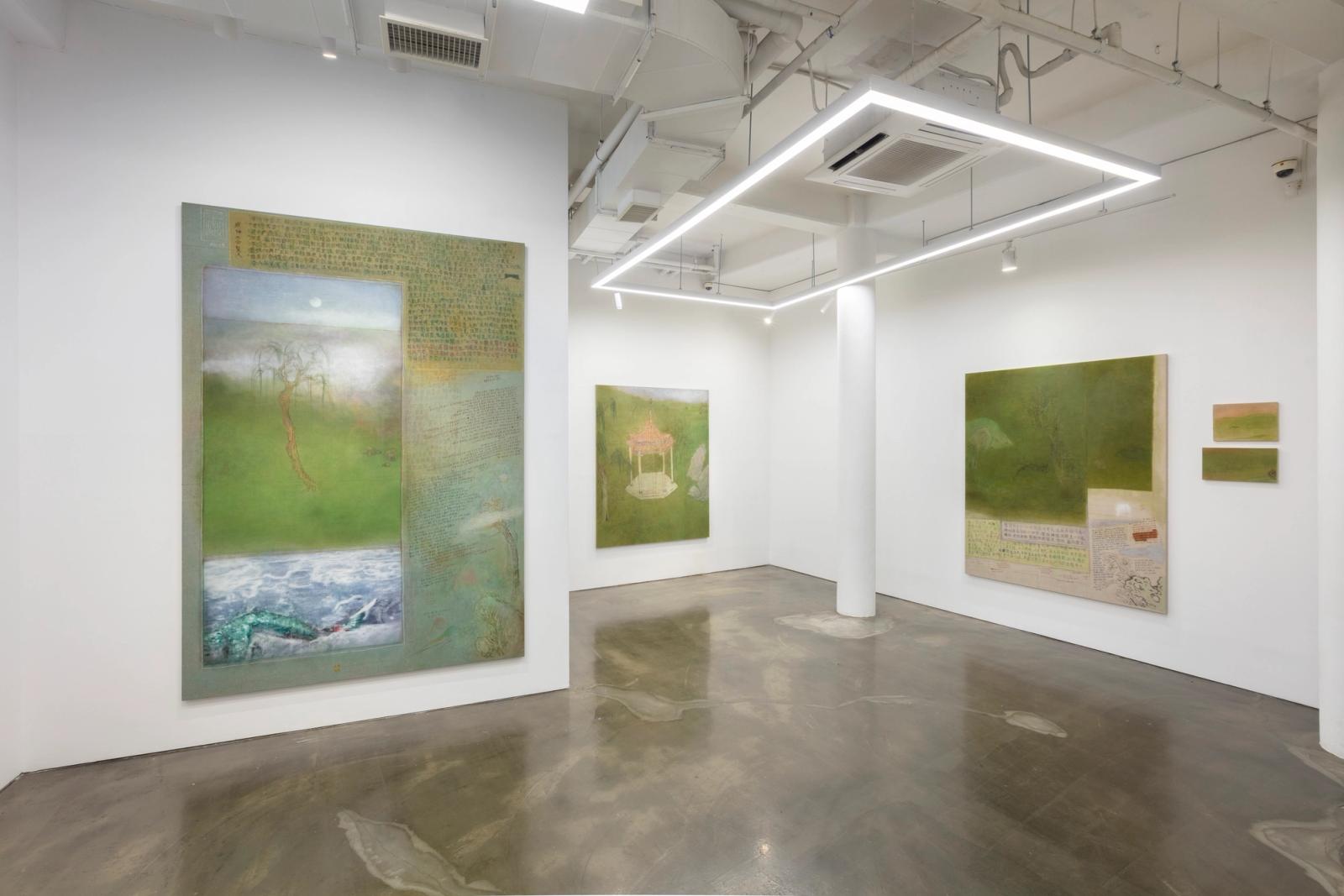
About the exhibition
Choe Sooryeon's paintings here join three things: a classical Chinese tale in its original characters, a Korean translation with pronunciation readings, and faint images such as willows, peach trees and lotuses. The tales are zhiguai, old Chinese stories of the strange. At some moments you can read the writing, and at others it fades into abstract marks, so reading and looking keep changing places.
In an essay for the show, the artist Bona Park relates this layering to the palimpsest, an idea from Gérard Genette in which an earlier text stays visible under new writing. Its heading says that reading is strange and seeing is uncanny. The gallery's page shows two works, both named in Korean: 무덤 위의 대나무 두 그루 (2025) and 병든 공미원의 저승 유람 (2026).
About the artist
Choe Sooryeon (b. 1986) graduated in painting from Hongik University in 2010 and from the graduate painting program at Seoul National University in 2017. The Seonnyeo (celestial maiden) and Taepyungnyeo series look at female figures shared across Northeast Asia, whom old tales present as gentle young women and modern media repeats as clichés. Gallery Chosun says the works criticize that passive femininity while keeping a nostalgia and sorrow for it. Other canvases copy and translate writing on painting, religion and the Chinese classics.
Sources: Gallery Chosun: Choe Sooryeon · Gallery Chosun: Mustard Seed Garden Grave